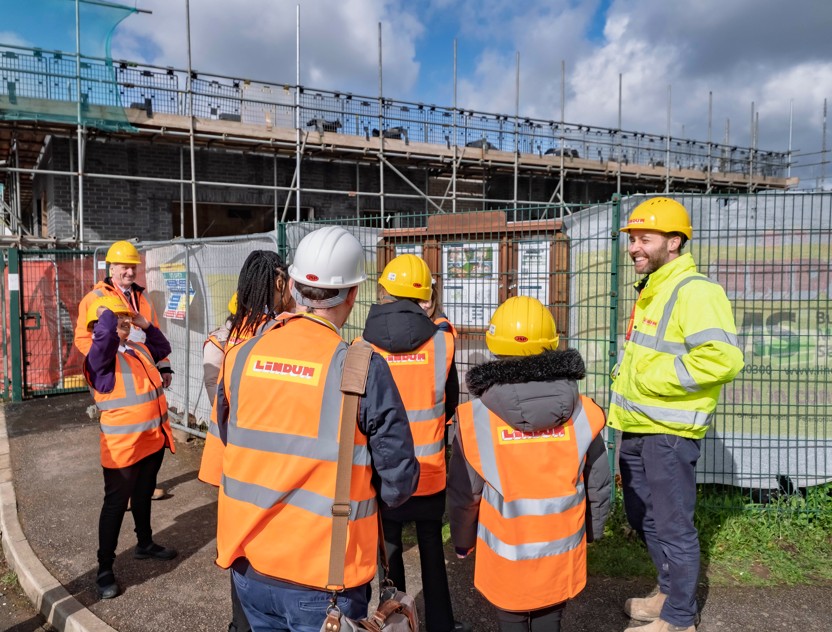
Lindum has been commended for its ‘outstanding’ performance by the Considerate Constructors Scheme (CCS) while delivering new SEND accommodation at Nottingham Girls’ Academy.
Under the updated scoring model, which went live in May 2026, the site was rated 98% for community, 92% for environment and 94% for workforce, resulting in an overall score of 95% following the second of two audits.
The CCS assessor highlighted “many positives”, including the site team’s excellent relationship with academy staff, support for wellbeing and healthy lifestyles, good communication with neighbours and strong health and safety leadership. The report also noted very good use of local resources and supply chain partners.
Key achievements included over £600,000 in Social Value and Local Economic value added, 47% of project spend with companies within 20 miles, 40% of labour from within 20 miles, and 100% diversion from landfill.
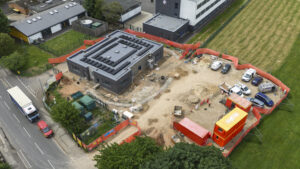
The project, which Lindum is delivering for Nottingham City Council through the SCAPE Framework, involves constructing a new single-storey SEND unit. The building will provide four classrooms for 24 schoolchildren to move into this Autumn.
Shaun Cass, Lindum Contracts Manager, said: “Receiving such a positive CCS audit reflects the effort our whole site team and supply chain put into being considerate neighbours, supporting Nottingham Girls’ Academy, and delivering safely and sustainably.
“The feedback recognises the strong relationship with the academy, our communication with neighbours, our wellbeing support for workers and our focus on local spend, social value and recycling.
“It makes a difference because it shows our work is not just about constructing a building – it is about leaving a positive impact on the school, the community and everyone involved in the project.”
Nicole Hill, Social Impact Coordinator, SCAPE, said: “It’s fantastic to see Lindum achieve such strong Considerate Constructors scores at Nottingham Girls’ Academy, with the visit highlighting excellent community, environmental and workforce performance.
“The genuine relationship they’ve built with the academy, focus on the wellbeing of every team member, and commitment to sustainability all reflect the high standards we expect from projects delivered through the SCAPE framework.
“This is exactly the kind of considerate, community-minded construction that builds lasting trust between our industry and the people it serves.”
By registering the site with the CCS, Lindum committed to observing and implementing the CCS Code of Considerate Practice, which focuses on three key sections: respecting the community, caring for the environment and valuing the workforce.
What Lindum did…
Respecting the community
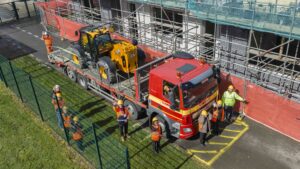
Lindum maintained clear, timely communication with the school, neighbours and those affected by the works. It issued pre-start information to neighbours, provided follow-up updates where needed, maintained an updated community notice board, and used a QR code at the site entrance to make it easy for the public to provide feedback.
Community impact and “being a good neighbour” were included in site inductions, while daily dialogue with the school caretaker helped ensure any issues were quickly communicated to the workforce through morning briefings. Lindum also re-sequenced works to reduce disruption during student exam periods and restricted deliveries to avoid school opening and closing times.
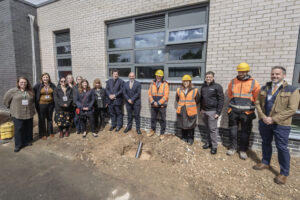
Alongside this, the contractor supported the academy and wider community through activities including a CLOCS road safety workshop, burying a time capsule, donations to the school and Focus Provision Group, support for St Margaret’s Church foodbank, and two days of free decorating at the Life Skills Programme.
The CCS report recognised this strong approach, noting the “excellent relationship with the Academy staff”, “effective communication” with neighbours, “no complaints received since the previous visit”, and a community score of 98%.
Caring for the environment
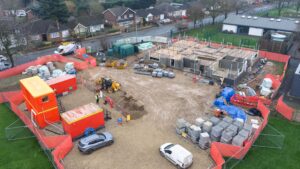
Lindum embedded sustainability into day-to-day site management and used practical measures to reduce carbon, waste, pollution and resource use. Environmental risk assessments were undertaken, the project operated under ISO 14001 accreditation and a carbon reduction plan was in place with training provided.
The company delivered carbon emissions toolbox talks, added an electric vehicle to the fleet, installed solar PV, used a 100% renewable energy tariff and reduced travel impact through car sharing, which saved more than 13,000 miles. Recycled material was incorporated into the works to reduce embodied carbon.
Pollution prevention was supported through spill kits, a spill policy and suppression for abrasive cutting equipment, with dust controlled using vacuums. Water-saving initiatives included flow restrictors, water-saving cisterns, hose shut-off triggers, water butts and automated meter logging.
Waste was managed through Lindum’s own PAS 402-accredited waste management company and the Construction Waste Portal, achieving a 100% diversion from landfill rate. The project also enhanced biodiversity, increasing biodiversity net gain by a further 6% above the original 10% target. The CCS report described sustainability as “a cornerstone of the contractor’s delivery”, with “100% recycling being a standout metric”, and awarded an environment score of 92%.
Valuing the workforce
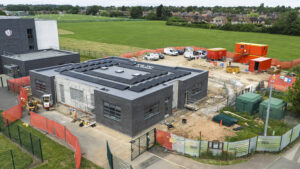
Lindum provided a safe, supportive and inclusive working environment, with strong emphasis on competence, wellbeing, welfare and fair treatment. All workers were required to hold the correct trade skills card, site inductions were carried out, and a training matrix was maintained for team members.
Right-to-work checks and an illegal worker survey were undertaken, while modern slavery awareness was reinforced through policy training, posters, workforce surveys and “red flag” awareness in inductions. Subcontractors were encouraged to use apprentices on the project, and staff development was supported through appraisals and personal development reviews.
Lindum also provided enhanced employment support including subsidised healthcare, paternity and maternity leave, free eye checks and on-site health checks for the workforce. Wellbeing was promoted through health and wellbeing checks, an Andy’s Man Club workshop, Lighthouse Charity information, a dedicated wellbeing board, healthy snacks and access to mental health first aiders. Welfare facilities were of good quality, with suitable rest areas, separate facilities and an Automated External Defibrillator on site.
Health and safety was managed through approved RAMS, regular inspections, emergency contact information and ISO 45001 accreditation. The CCS report recognised the “support for all of the team members on site, particularly in terms of wellbeing and healthy lifestyles” and awarded a workforce score of 94%.
